Glove size and fit are different
The inch number on a baseball or softball glove describes the glove, not the size of your hand. Hand measurements help you choose the fit around the palm, fingers and wrist. Choose glove length separately for your sport, position and age.
How to measure the catching hand

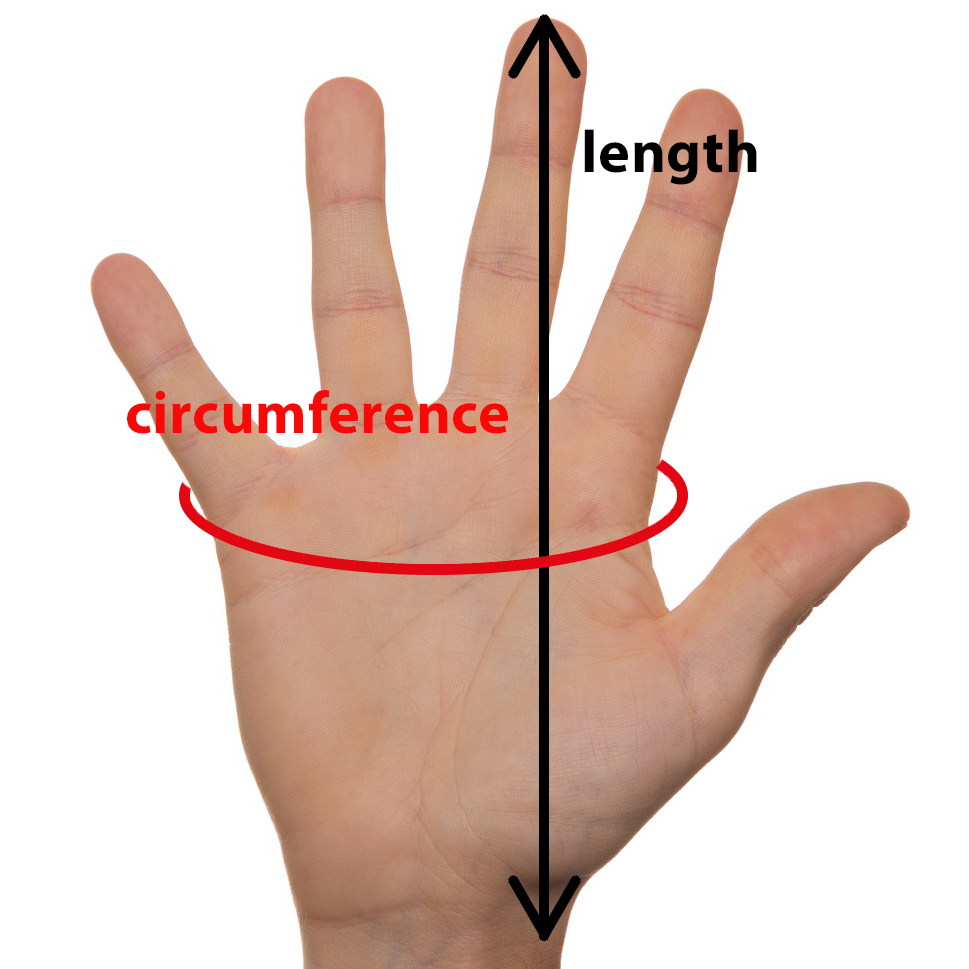
Measure the catching hand. A right-handed thrower normally wears the glove on the left hand (RHT); a left-handed thrower uses the right (LHT). Relax your hand and straighten the fingers. Measure from the wrist crease to the tip of the middle finger. Then measure around the widest part of the palm below the knuckles, excluding the thumb. Keep the tape snug without pulling it tight. Record both measurements in centimetres. They guide fit selection; they do not convert directly to glove inches.
How to check the fit
The glove should stay secure at the wrist without pinching. Fingers should sit comfortably in their stalls, the palm should feel supported, and you should be able to close the glove around a ball. Try several catches and a quick transfer to the throwing hand. Leather may soften with break-in, but break-in cannot fix the wrong fit.
Too large or too small
A glove that is too large slides on the hand, leaves the fingers floating in the stalls and is difficult to close. This especially reduces a young player’s control.
A glove that is too small presses on the knuckles or wrist, crowds the fingertips and causes fatigue. Try another fit or model instead of simply choosing a longer glove.
Standard, Narrow, Contour and Youth Pro Taper
Standard has a regular hand opening and finger stalls. Narrow has a slimmer opening for a narrow palm. Contour adjusts the wrist area for a smaller or slimmer hand. Youth Pro Taper combines a smaller opening with shorter or narrower finger stalls for younger players. Names vary by brand, so check the individual model.
What changes for softball
A softball is larger than a baseball, so softball gloves usually have a deeper pocket and may be longer. Fastpitch models often suit smaller hands; slowpitch models can be larger. Check throwing hand, fit and position before settling on length.
Frequently asked questions
Does hand length equal glove size?
No. Hand length and palm circumference describe your hand; glove inches describe the glove. There is no direct conversion.
Which hand should I measure?
Measure the hand that wears the glove: usually the left for RHT and the right for LHT.
How should the glove fit?
It should stay secure at the wrist, avoid pressure on the fingers and close around the ball. Try a different cut if it slips or pinches.
Quick summary
Measure the catching hand from wrist crease to middle fingertip and around the palm without the thumb. Use those numbers to choose a fit, test closure, then choose glove length for your position.